
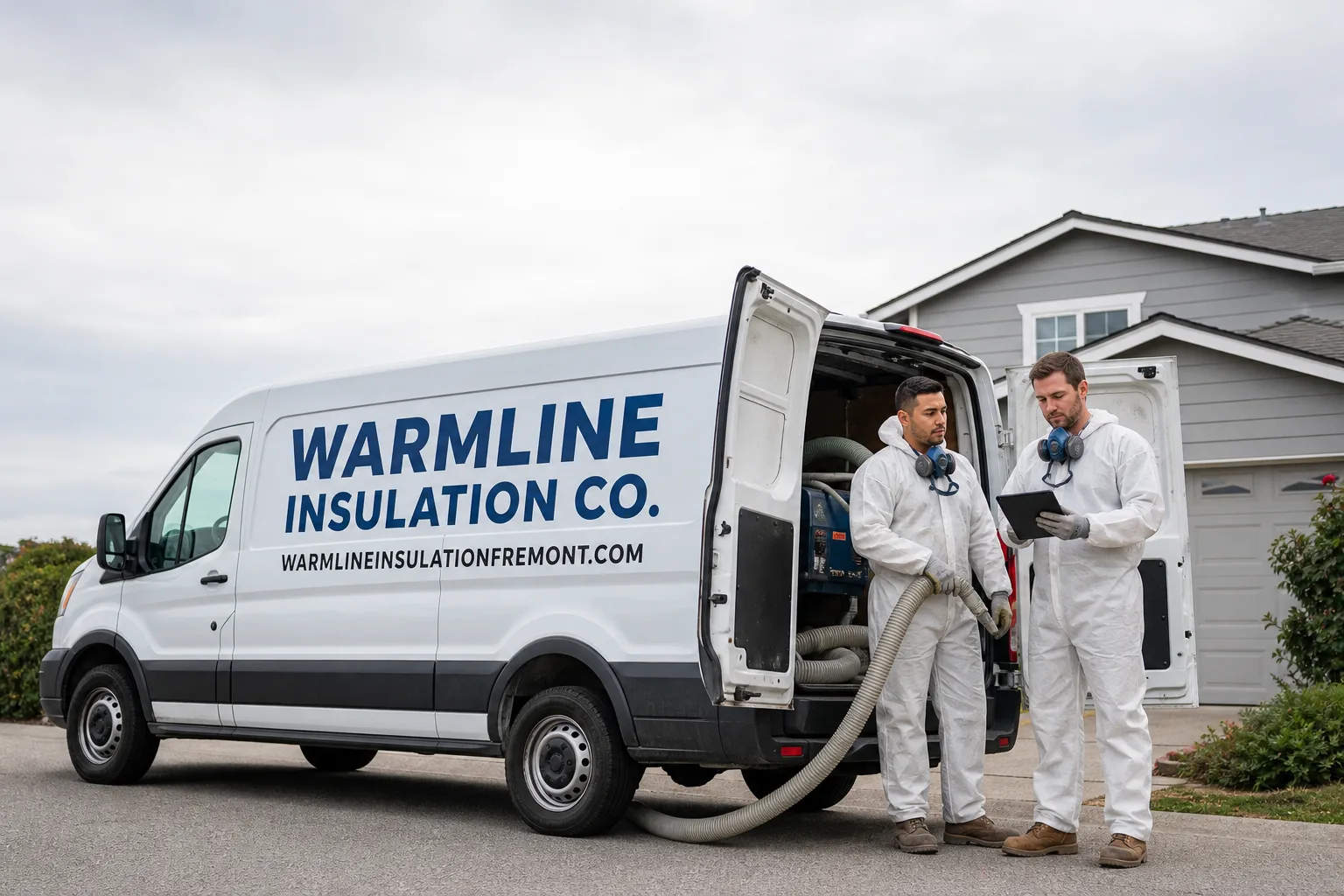
How Much Does Blown-In Insulation Cost in Fremont?
Blown-in insulation in Fremont, CA typically costs $1,200 to $3,800 for a standard attic job, with most homeowners paying around $1,800 to $2,400 for a 1,200- to 1,800-square-foot attic brought up to California’s recommended R-49 to R-60 level. Labor, the type of material (cellulose vs. fiberglass), current insulation depth, and whether air sealing is done at the same time are the four biggest variables that move that number up or down.
If you want a number specific to your home in Fremont, Warmline Insulation Co. offers free, no-pressure Blown-In Insulation services estimates – call (510) 953-5663 and a live person will pick up, any time of day.
Blown-In Insulation Cost Breakdown (2026)
Blown-in insulation in Fremont sits at a price point that reflects both Bay Area labor costs and California’s above-average energy code requirements. The table below gives you real line-item ranges based on what we see in the Fremont market – not national averages padded with disclaimers.
| Project Type | Typical Price Range (2026) | Notes |
|---|---|---|
| Attic top-up (partial, low R-value to R-38) | $700 - $1,200 | Existing insulation present; adding depth only |
| Attic blown-in, full install to R-49 (1,000-1,400 sq ft) | $1,200 - $1,900 | Cellulose or fiberglass; standard access hatch |
| Attic blown-in, full install to R-49 (1,500-2,000 sq ft) | $1,800 - $2,600 | Most common job size in Fremont |
| Attic blown-in, full install to R-60 (1,500-2,000 sq ft) | $2,200 - $3,200 | Exceeds code minimum; recommended for older homes |
| Attic blown-in on larger home (2,000-2,800 sq ft) | $2,600 - $3,800 | Includes more bagging, longer setup time |
| Attic air sealing + blown-in (combined) | $1,900 - $4,200 | Best ROI option; sealing before blowing locks in results |
| Old insulation removal before blown-in install | $600 - $1,500 add-on | Required when existing material is damaged, moldy, or pest-contaminated |
| Wall cavity blown-in (exterior walls, dense-pack) | $1.50 - $3.00 per sq ft of wall | Requires drilling access holes; more labor-intensive |
| Crawl space blown-in (under-floor application) | $1,800 - $3,200 | Often paired with vapor barrier installation |
What makes these numbers move?
The biggest single cost driver is square footage, but it’s not the only one. A 1,500-square-foot attic in Niles with excellent access and no existing debris might cost $400 less than the same square footage in a Centerville home where the attic entrance is a pull-down ladder with a sharp angle and existing vermiculite that needs testing. Access difficulty adds real labor time, and labor in Fremont runs higher than inland markets because of Bay Area wages and fuel costs for crews.
Material choice matters too. Cellulose (typically made from recycled paper, treated for fire and pest resistance) runs slightly cheaper per bag than fiberglass blown-in and settles to about R-3.7 per inch. Fiberglass blown-in, using products from Owens Corning or Johns Manville, runs R-2.2 to R-2.7 per inch but resists moisture absorption better – relevant in Fremont’s coastal-influenced microclimate where morning fog and marine layer can spike attic humidity in neighborhoods near the bay. Knauf and GreenFiber cellulose are both solid performers in this market and are among the brands we use regularly.
One note on California energy code: Title 24 sets R-38 as the minimum for existing home attics, but R-49 is the new construction standard, and most building-science professionals – including our team at Warmline – recommend targeting R-49 to R-60 in Fremont specifically, because the Delta breeze effect means nighttime temperatures drop sharply even in summer. That temperature swing causes more heat flux than most homeowners expect, and thin insulation loses the battle quickly.
What Affects Blown-In Insulation Pricing in Fremont
Fremont isn’t a one-size-fits-all market. The city spans distinct microclimates – from the warmer, drier Mission Hills and Niles Canyon corridors to the cooler, foggier areas near the bay in Warm Springs and central Fremont – and that geography directly shapes which insulation specs make sense and what a job actually involves. Here are the six factors that most reliably move your quote up or down.
- Attic square footage and configuration. This is the base number everything else multiplies against. Larger attics need more material and more blowing time. Unusual configurations – cathedral sections, knee walls, multiple HVAC chase-throughs – add setup complexity. In Mission San Jose-area homes built between 1970 and 1990, we regularly run into partial knee-wall cavities that require hand-packing in addition to machine blowing, which adds an hour or two of labor.
- Current insulation depth and condition. If your home already has R-19 worth of fiberglass batts in reasonably good shape, a top-up to R-49 costs far less than a full removal and reinstall. However, if we find rodent contamination, mold, or wet insulation – common in older Niles and Centerville homes with ventilation issues – removal is not optional. Blowing new material over contaminated old insulation traps the problem and voids the benefit of the new install.
- Material type: cellulose vs. fiberglass blown-in. Both work well in Fremont’s climate, but they behave differently. Cellulose is denser, fills gaps more aggressively, and performs slightly better as an air barrier on its own. Fiberglass blown-in is lighter, won’t support mold growth, and is the preferred choice when we know there’s recurring attic moisture. The price difference per square foot is modest – usually $0.10 to $0.25 – but it compounds over a large attic.
- Attic access and clearance. A standard 22×30-inch pull-down stair with good headroom is the easy scenario. A fixed 14×24-inch hatch with a steep pitch and HVAC equipment blocking the work path? That’s two or three extra hours of labor minimum. Older homes in the Irvington and Glenmoor neighborhoods sometimes have access panels that barely fit a person, let alone equipment – and that affects cost in every Fremont attic job we quote.
- Whether air sealing is done first. This is the detail that separates a good insulation job from a great one. Air sealing the attic floor (around top plates, recessed lights, plumbing penetrations, and HVAC chases) before blowing insulation can cut heat loss by 20 to 30 percent more than insulation alone. It adds $400 to $900 to the job depending on the number of penetrations, but the energy savings typically recover that cost within two to three years in Fremont’s PG&E rate environment. We always recommend combining the two services.
- Rebates and local utility incentives. PG&E’s Energy Upgrade California rebates and Alameda County programs have periodically offset insulation costs by $200 to $600 depending on the year and scope. Qualification usually requires reaching a specific R-value and sometimes requires a pre- and post-installation energy audit. Our team can walk you through what’s currently available when you call for your estimate – these programs change, and we track them so you don’t have to.
Fremont-Specific Factors You Won’t Find in National Price Guides
Most insulation cost guides online are written for a generic U.S. market and give you ranges that might apply in Kansas but don’t reflect what it actually costs to hire a licensed, insured contractor in the East Bay. Here’s what’s specific to Fremont.
Bay Area labor rates
Insulation labor in Fremont runs roughly 25 to 40 percent higher than national averages. This isn’t a surprise given Bay Area wages, fuel costs, and the cost of operating a licensed and insured business in California. A quote that looks dramatically cheaper than the ranges above should prompt questions – the most common shortcuts are skipping air sealing, undermeasuring depth, or using fewer bags of material than the R-value actually requires.
The Warm Springs heat trap
The Warm Springs district sits in a geographic bowl that causes afternoon temperatures to run 5 to 12 degrees warmer than coastal Fremont on summer days. We see this in energy bills and in the way attics perform. Homes in Warm Springs that stall at R-30 see meaningfully higher cooling loads than the same house would in a cooler part of town. If you’re in Warm Springs or the southern Fremont areas closer to the Milpitas border, budgeting for R-49 to R-60 is genuinely worth the extra material cost.
Marine layer and attic moisture
In neighborhoods closer to the bay – central Fremont, Ardenwood, and parts of the Civic Center area – morning marine layer keeps outdoor humidity elevated from roughly October through May. Attics in these areas with inadequate ventilation develop condensation issues that degrade insulation performance over time. Before we blow in new material in these neighborhoods, we always check vapor flow and soffit ventilation. This is a step that gets skipped when you hire a generalist, and it’s the reason we’ve re-done jobs on homes that had insulation installed somewhere else just two or three years earlier.
Older housing stock in Niles and Irvington
A significant share of Fremont’s housing stock in Niles and Irvington dates from the 1950s through 1970s, when insulation standards were minimal. Many of these attics have original fiberglass batts at R-11 to R-19 – or nothing at all. Some have vermiculite insulation from that era, which requires asbestos testing before any disturbance. If your home was built before 1980 and you haven’t had the attic checked, that’s worth confirming before any work begins. It doesn’t necessarily mean the news is bad, but it’s information a responsible contractor needs before quoting removal.
How to Save on Blown-In Insulation in Fremont
There are real ways to reduce your total cost without cutting corners on the result. Here’s what actually works.
Combine services in one visit
Mobilization – getting a crew and equipment to your home – is a fixed cost regardless of how long the job takes. If you’re already having blown-in insulation installed, adding attic air sealing in the same visit costs considerably less than scheduling it as a separate job. The same logic applies to attic cleaning or a radiant barrier installation. Bundling two services in a single visit is one of the most reliable ways to reduce cost per service without affecting quality.
Schedule in late fall or winter
Most Fremont homeowners call about insulation in August when their cooling bill arrives or in January when they’re cold. Spring and early winter tend to be somewhat less busy, and that’s when scheduling a job is easiest – which sometimes means better crew availability and faster completion.
Get a home energy audit first
A home energy audit is the diagnostic step that prevents overspending. An auditor can tell you exactly where your home is losing conditioned air and heat, so you can prioritize the services that will deliver the most measurable improvement. It’s possible your walls need attention more urgently than your attic, or that a combination of air sealing and modest insulation top-up outperforms a full blown-in install. Our audits look at the whole picture, not just the attic. Starting with an audit is especially valuable in older Fremont homes where building envelope deficiencies go beyond insulation alone.
Use the standing discounts
Warmline Insulation Co. offers a permanent 5% Senior and Veteran discount on all services – no expiration, no conditions beyond eligibility. If your project includes a repair component over $250, $50 off applies there as well. These aren’t promotional offers with end dates; they’re part of how we price for the communities we’ve served in Fremont since 2011.
Ask about current utility rebates
PG&E and Alameda County have run programs that rebate a portion of insulation costs when specific energy-efficiency thresholds are met. Availability changes year to year. When you call for a free estimate at (510) 953-5663, ask us what’s currently running – we stay current on rebate programs so we can factor them into your project plan. A live person will answer and can walk you through what applies to your home.
Don’t pay twice – get it done right the first time
The most expensive blown-in insulation job is one that fails within a few years because the contractor skipped air sealing, underestimated the required depth, or ignored moisture issues. That’s a full reinstall cost on top of what you already paid. Warmline’s 90-Day Done Right Promise means if anything about the install isn’t right, we make it right at no additional cost to you – a written commitment, not a verbal reassurance. That kind of guarantee is rare, and it’s one of the reasons homeowners in Fremont call us back for their next project instead of looking for someone cheaper.
Cellulose vs. Fiberglass Blown-In: Which Should Fremont Homeowners Choose?
Both materials work in Fremont, and both are installed using the same blowing equipment. The right choice depends on your specific attic conditions, not a blanket preference.
Cellulose blown-in
Made from recycled paper fiber treated with borate for fire and pest resistance, cellulose is dense-packing well and tends to fill odd-shaped cavities with less air channeling. Brands like GreenFiber are common in this application. Cellulose runs approximately R-3.7 per inch, meaning you need about 13 inches to reach R-49. It’s marginally less expensive per bag than fiberglass, and its density gives it some built-in air resistance. The tradeoff: cellulose absorbs and holds moisture more than fiberglass does, which matters in the foggier parts of Fremont near the bay. If your attic ventilation isn’t dialed in, cellulose can retain moisture long enough to lose R-value and potentially support mold growth.
Fiberglass blown-in
Products from Owens Corning (PINK Next Gen Fiberglas) and Johns Manville (Spider or Climate Pro) are common in Fremont attics. Fiberglass blown-in is non-combustible, doesn’t absorb moisture, and doesn’t compact as much over time. R-value per inch is lower than cellulose (roughly R-2.2 to R-2.7), so you need more depth – about 18 to 22 inches for R-49. That extra depth requires a taller attic or more material, and the cost reflects that. For homes near Ardenwood or central Fremont where attic humidity is a recurring concern, fiberglass blown-in is often the call we make.
Neither material is universally superior. In practice, the condition of your attic, your ventilation setup, and your budget all factor in. A proper site assessment – which Warmline provides free before any quote – is the only reliable way to pick the right one for your specific home.
What the Installation Process Looks Like
Homeowners sometimes hesitate to call because they’re not sure how disruptive the process is. The short answer: blown-in insulation is one of the least disruptive insulation services we do, and most attic jobs in Fremont are completed in a single visit.
Here’s the general sequence for an attic blown-in project:
- Pre-install walkthrough. Your technician will inspect the attic, confirm the existing R-value, check for moisture or pest issues, and measure access points. This takes 20 to 40 minutes and shapes everything that follows.
- Air sealing (if included). Before any insulation goes in, we seal penetrations around top plates, recessed cans, plumbing stacks, and HVAC chases with fire-rated foam or caulk. This is the step that most improves overall performance and the one most often skipped by non-specialist contractors.
- Depth markers placed. Small ruler-markers are installed across the attic floor so depth is consistent and verifiable. This is a code requirement in California and an easy thing to confirm was done properly.
- Blowing begins. The truck-mounted or portable blower feeds material through a large hose into the attic. For an average Fremont attic, this stage runs one to two hours. It’s loud near the hose insertion point but doesn’t require the homeowner to vacate.
- Cleanup and verification. The technician confirms depth at multiple points, cleans up any material that spilled near the hatch, and walks you through the finished job before leaving.
For a full blown-in attic install with air sealing, plan on three to five hours total. Wall cavity dense-pack takes longer due to the drilling and patching involved. Most jobs don’t require you to move furniture or leave your home.
FAQs – Blown-In Insulation Cost in Fremont
How much does blown-in insulation cost per square foot in Fremont?
Blown-in insulation in Fremont runs approximately $1.00 to $2.50 per square foot for attic applications, depending on the starting R-value, material choice, and whether air sealing is included. Jobs that require existing insulation removal before reinstalling will add $0.40 to $0.80 per square foot on top of that. For wall cavity dense-pack, the range is wider – $1.50 to $3.00 per square foot – because of the labor involved in drilling access holes and patching. For a precise number, call (510) 953-5663 for a free estimate. A live person answers every call.
Is cellulose or fiberglass blown-in cheaper in Fremont?
Cellulose blown-in is typically $0.10 to $0.25 per square foot cheaper on material costs, but fiberglass often requires fewer moisture-related callbacks in Fremont’s foggier neighborhoods, which matters for long-term performance. The total cost difference on a typical 1,500-square-foot attic is usually $150 to $375 – not nothing, but not the deciding factor for most homeowners. We’ll recommend the right material for your specific attic after the pre-install walkthrough, not before we’ve seen it.
Does blown-in insulation actually lower energy bills in Fremont?
Yes – in most Fremont homes we insulate, owners report a 15 to 25 percent reduction in heating and cooling costs within the first billing cycle after a proper attic blown-in install combined with air sealing. Fremont’s daily temperature swings (the bay-cooled nights and warmer midday temperatures) create more heat flux than most homeowners realize, and a thin attic allows that flux to work against your HVAC system constantly. Reaching R-49 or higher cuts that cycle significantly. Homes in Warm Springs, where afternoon heat gain is more severe, tend to see the larger end of those savings figures.
Can Warmline do blown-in insulation and removal in the same visit?
Yes. Most removal-plus-reinstall jobs are completed in a single visit, typically four to seven hours depending on attic size and the volume of material being removed. We bring vacuum equipment to extract the old material and blowing equipment to install the new in the same mobilization. This is one of the advantages of using a full-spectrum insulation specialist rather than a general contractor who has to schedule trades separately. If your attic has pest contamination or rodent activity, we’ll address the cleaning before installing new material – check our home page for a full breakdown of connected services.
What R-value does Fremont require for attic insulation?
California Title 24 sets R-38 as the minimum for existing residential attics, but new construction in Fremont’s climate zone (Zone 3) targets R-49. We consistently recommend R-49 to R-60 for existing Fremont homes because the cost difference between R-38 and R-49 is modest at install time, but the performance difference compounds over years of operation – especially in the warmer inland areas and in older homes where the building envelope has other air leakage issues. Reaching R-60 makes sense when budget allows and when the attic configuration supports it without significant compression at the eaves.
Is it worth adding air sealing at the same time as blown-in insulation?
Almost always yes. Air sealing before blown-in insulation is the single highest-ROI add-on we offer, and doing it at the same time reduces the combined cost by eliminating a second mobilization. In Fremont homes built before 1990, attic air leakage through top plates and recessed lights often accounts for more conditioned-air loss than the insulation value alone can compensate for. Adding air sealing to a blown-in project typically costs $400 to $900 more and recovers that cost in energy savings within two to three years at current PG&E rates. Our Blown-In Insulation in Fremont service page covers how we approach this combination in detail.
Why Fremont Homeowners Call Warmline First
Warmline Insulation Co. has been working in Fremont since 2011. That’s 15 years of attics in Niles, Warm Springs, Irvington, Mission San Jose, Ardenwood, and Centerville – enough years to know that the Warm Springs heat trap hits differently than the marine-layer moisture in Ardenwood, and that older Irvington homes with original blown-in insulation from the 1960s often have situations that require judgment, not just equipment.
Neil Ashford leads our team, and the standards he’s built the company around are straightforward: licensed and insured, background-checked technicians on every job, upfront pricing with no hidden fees, and every project backed by the 90-Day Done Right Promise. If the job isn’t right, we make it right. That commitment is in writing.
We also handle ten insulation and home-performance services under one roof – blown-in, attic air sealing, spray foam, radiant barrier, crawl space encapsulation, wall insulation, insulation removal and replacement, attic cleaning and rodent proofing, and home energy audits. That matters because most insulation problems don’t exist in isolation. A home that needs blown-in insulation in the attic often also has crawl space moisture issues or air leakage at the rim joist. Coordinating all of that through one contractor, in fewer visits, is a practical advantage for any Fremont homeowner who’s juggled trades before.
Senior and veteran homeowners get a permanent 5% discount on all services. No paperwork hurdle, no expiration.
Ready for a free estimate?
Call (510) 953-5663 – a live person answers 24 hours a day, seven days a week. No voicemail, no callback queue. We’ll schedule a free, no-pressure estimate, walk your attic with you, and give you a specific number for your specific home. Most jobs are quoted and completed in a single visit.
Pricing reflects the Fremont market as of 2026. Warmline Insulation Co. offers free estimates – call (510) 953-5663.
Written by Neil Ashford, Owner at Warmline Insulation Co., serving Fremont since 2011.
What Our Customers Say
"Radiant barrier stapled to the rafters plus new baffles at the soffits. Attic temperature dropped enough that the AC runs noticeably less in the afternoon. Crew was in and out in a day and left the garage cleaner than they found it."
- Sam Kessler"Upstairs was ten degrees hotter than downstairs every summer. They pulled the attic to bare joists, air-sealed every can light and top plate first, then blew it to R-49. First August in this house where the bedrooms and the living room read the same on the thermostat."
- Marcus Hale"Rodents had been in the attic for years before we bought the place. They vacuumed everything out, sanitized, sealed the entry points with mesh and foam, and only then put new insulation down. Photos of every stage before I paid."
- Darnell Whitfield