


Fast, Reliable Attic Insulation Across Campbell
If your Campbell home was built between 1950 and 1975, there’s a strong chance your attic is quietly costing you hundreds of dollars a year. Those original fiberglass batts, usually R-11 or less when installed, have settled and compressed over decades of Santa Clara Valley heat. Today they’re performing closer to R-5. That means your air conditioner works harder every summer afternoon when Campbell hits 90°F or more. We fix that problem in a single visit, with blown-in insulation rated for our inland heat and baffles placed correctly the first time. Call (510) 953-5663 and you’ll reach a live person, 24/7, who can schedule a free estimate at your Campbell home.
Why Warmline Insulation Co. Is Campbell’s Preferred Attic Insulation Company
We’ve been doing this work since 2011, and Campbell’s housing stock has become one of our most familiar canvases. The ranch homes off Winchester Boulevard, the tree-lined streets near John D. Morgan Park, the mid-century tracts south of Hamilton Avenue: these neighborhoods share construction DNA, and we know exactly where their thermal envelopes fail. Our Attic Insulation crews have crawled through hundreds of Campbell attics, and the problems are consistent. Original R-11 batts flattened to nothing. Unsealed top plates pulling hot air up through interior walls. Baffles missing or installed backward on west-facing slopes. Homeowners don’t need a generalist for this. They need someone who can spot the failure in ten minutes and fix it before dinner.
Every technician we send to Campbell is background-checked, uniformed, and trained on the specific housing vintages common to this city. Neil Ashford, our founder, still personally reviews complex attic projects across the South Bay to make sure the work meets our standard. Our 90-Day Done Right Promise backs every job: if something isn’t right, we make it right. That commitment isn’t boilerplate. It’s written into how we operate. Most Campbell jobs are completed in one visit, and every job carries our live-answer guarantee: call (510) 953-5663 any time, day or night, and a person picks up. No voicemail runaround.
Our Attic Insulation Services in Campbell
Blown-In Attic Insulation
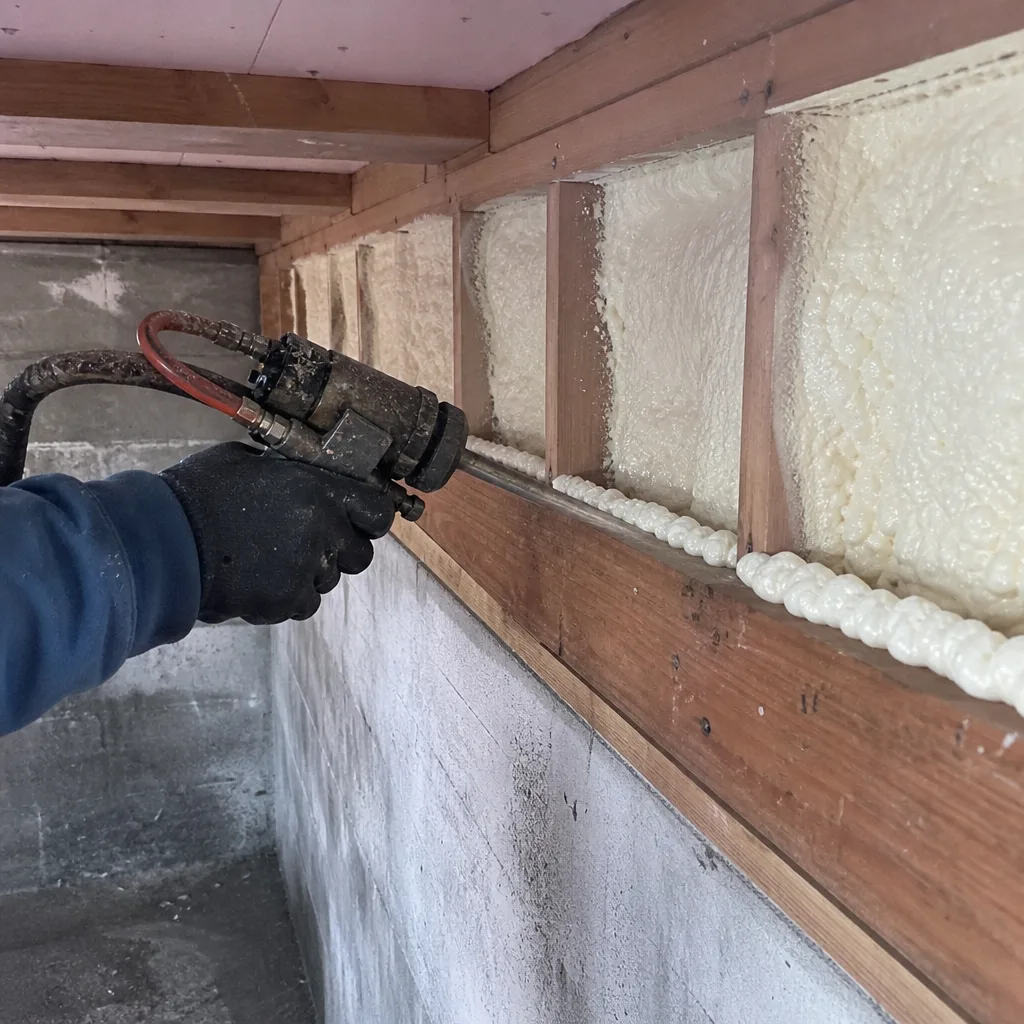
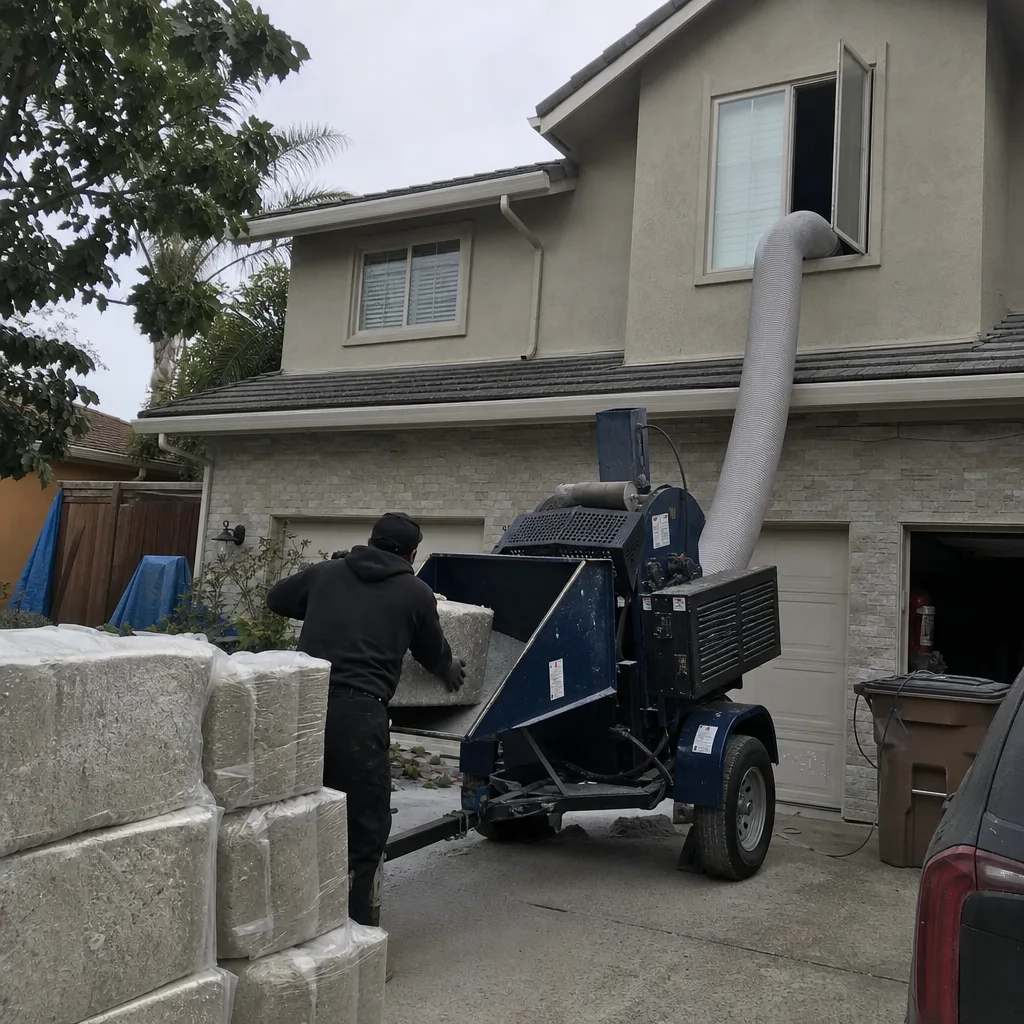
For Campbell’s post-war ranch homes, blown-in insulation is usually the fastest path to a properly sealed attic. We use Owens Corning AttiCat fiberglass and GreenFiber cellulose depending on the attic layout and existing material. Blown-in fills gaps that batts can’t, especially around irregular framing in the tight attics common to 1,200 to 1,800 square foot Campbell ranches. In the Dry Creek area, we recently blew R-38 across a 1963 ranch attic in under four hours. The homeowner called two weeks later to say their upstairs bedroom stayed under 78°F on a 94°F afternoon without the portable AC they’d relied on for years.
Attic Batt Insulation
Batts still have their place in Campbell homes, particularly where attic access is limited or where we’re insulating between joists in a garage conversion. We use Rockwool and Owens Corning batts, installed to fit tightly against the top plates without compression. Compression is the silent killer of batt performance. A 6-inch batt squeezed into a 4-inch cavity loses most of its R-value. Our crews cut and fit batts correctly, and we verify the depth before we leave. For homes in Campbell’s older blocks, where framing spacing varies from original construction to later additions, that precision matters.
Attic Insulation Top-Up
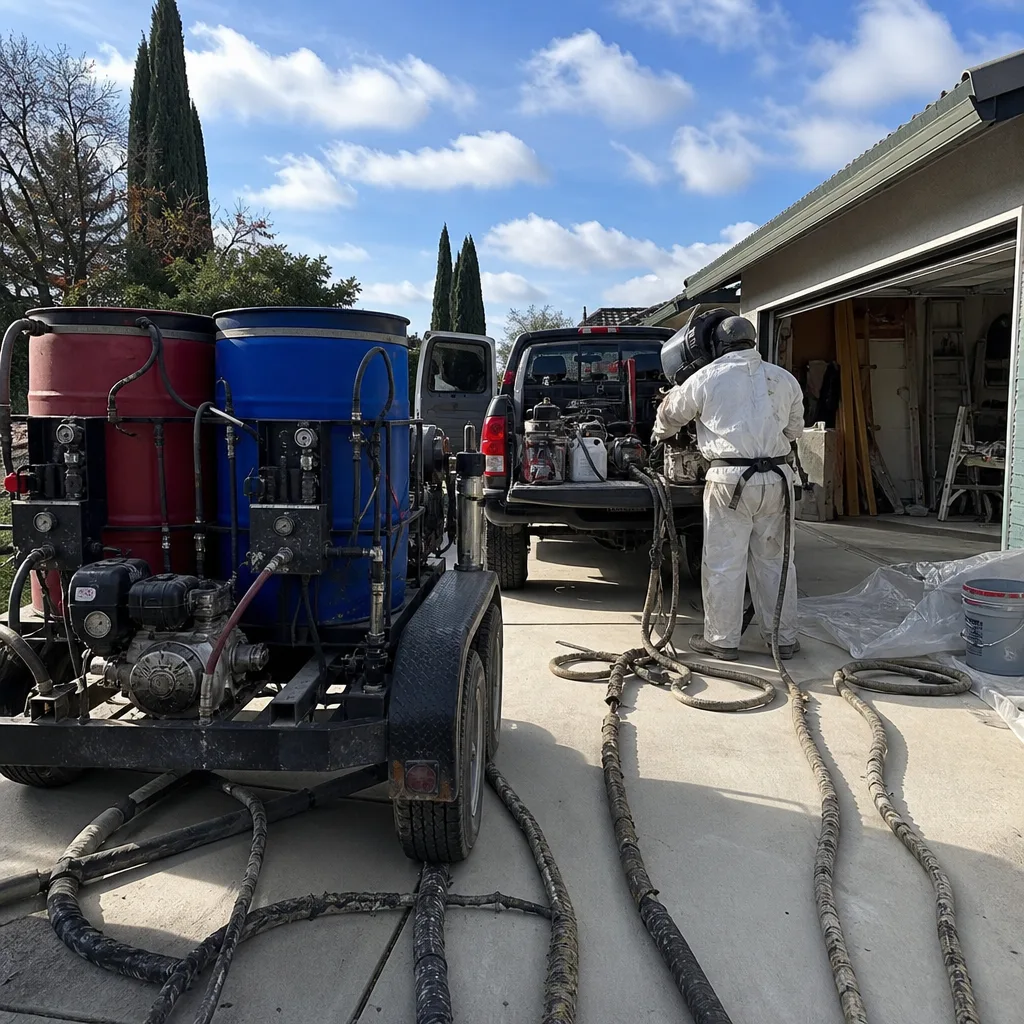
This is the most common service we perform in Campbell. If your attic already has some insulation but it’s settled below the top of the joists, a top-up brings it back to a real R-38 or higher. Most 1950s to 1970s Campbell homes originally got R-11 batts. After fifty or sixty years of heat cycles and occasional foot traffic from cable installers or HVAC work, those batts have compressed to R-5 or less. Adding fresh blown-in insulation on top, rather than removing everything, is faster and more affordable than a full replacement. We typically complete a top-up on a Campbell ranch in half a day. Your PG&E bills start dropping the next month.
Attic Insulation Replacement
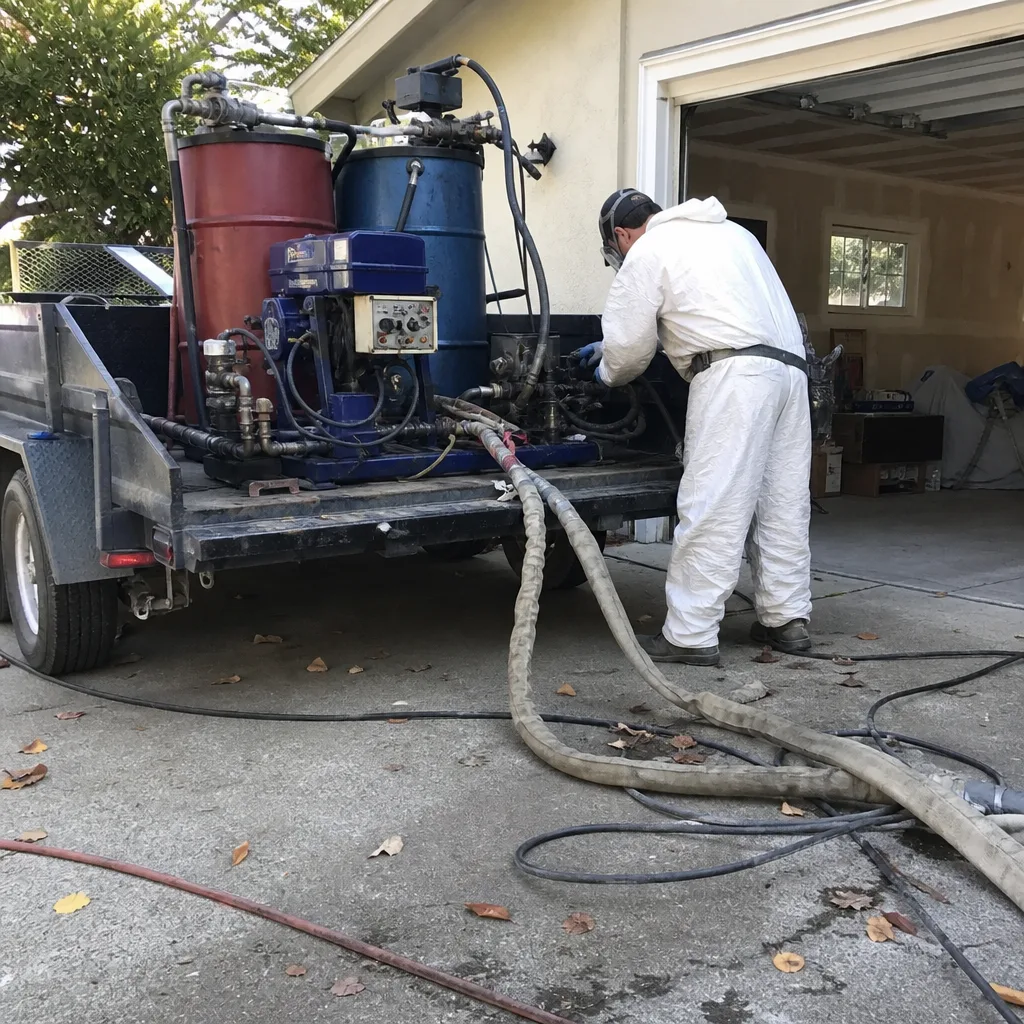
When insulation is contaminated with rodent droppings, soaked from a roof leak, or simply too far gone, replacement is the right call. We remove the old material, air-seal the attic floor, and install new insulation to current standards. Replacement also gives us a clean surface to address air leaks at top plates, wiring penetrations, and the framing transitions where 1980s room additions meet the original house. In Campbell, those transitions are a recurring source of comfort complaints. No one air-sealed them when the addition was built, and they’ve been acting as convection chimneys ever since.
What happens when you call
- 1
A real person answersNo phone trees - you reach a local pro.
- 2
You get an upfront price rangeHonest numbers before anyone is dispatched.
- 3
A background-checked tech heads outLicensed & insured, dispatched right away.
- 4
You approve before work beginsNothing starts until you say go.
Trusted Brands We Service in Campbell
We’re not married to one manufacturer, because different Campbell attics call for different materials. We install Owens Corning and GreenFiber blown-in products, Rockwool batts where batts make sense, and Demilec spray foam at air-sealing junctions that need an air barrier as well as insulation. That brand flexibility matters when we’re working on a 1950s ranch with a 1980s addition: the original attic gets blown-in, the addition’s framing transition gets foam, and the garage conversion wall gets batts. We stock material locally for Campbell jobs, so turnaround is fast. No waiting on a distributor three counties away.
Common Attic Insulation Problems We See in Campbell Homes
- Compressed original batts. The R-11 fiberglass put into 1950s to 1970s Campbell ranches has settled over decades. We routinely measure attics where the insulation is under 3 inches deep. That leaves PG&E bills running 40 to 60 percent higher than they’d be with a proper R-38 attic.
- Unsealed room addition transitions. Campbell’s affordability pressure in the 1980s and 1990s drove a wave of garage conversions and permitted additions. Where the new roof meets the original top plate, nobody air-sealed the junction. Warm air pours into the attic or conditioned air leaks out, and that one bedroom is always hot or cold.
- Missing or unsecured baffles. Campbell sits far enough inland that we get dry evening winds, especially on west-facing roof slopes. If baffles were never installed or fell out of place, wind wash blows blown-in insulation away from the eaves, leaving the ceiling perimeter essentially uninsulated.
- Attic temperatures running 140°F or higher. Unlike coastal Santa Cruz or even the marine-influenced pockets of San Jose, Campbell loses the ocean buffer entirely. Summer attics routinely exceed 140°F. Without proper insulation depth and ventilation prep, that heat radiates down into the living space all night.
Pricing for Attic Insulation in Campbell, CA
Here’s what we quote for Campbell homes. A top-up on a typical 1,400 square foot ranch, bringing the attic from compressed R-5 to a true R-38, runs $1,600 to $2,800. Full removal and replacement on the same size home typically lands between $3,200 and $5,400, depending on access difficulty and how much air sealing is needed. Blown-in for an empty attic of that size runs $2,200 to $3,800. Baffles and ventilation prep add $350 to $700 when done as part of the insulation job. These are real ranges for Campbell’s market, not vague ballparks. Every estimate is free, written, and good for 30 days. You’ll also qualify for our standing offers: $50 off any repair over $250, or $89 for a seasonal tune-up, or a permanent 5% Senior & Veteran discount. Call (510) 953-5663 and we’ll give you an exact number before any work is scheduled.

Why Campbell’s Inland Heat Makes Insulation Depth Non-Negotiable
Campbell sits far enough inland in the Santa Clara Valley that it loses the marine layer most summer mornings. San Jose’s coastal-adjacent neighborhoods might catch a breeze off the bay. Campbell doesn’t. Summer afternoons climb into the 90s, and attics under a composition shingle roof routinely hit 140°F or higher. Winter nights dip into the mid-30s. That’s a 100-degree seasonal swing, and a 50-degree diurnal swing in the height of summer. Your attic insulation has to work in both directions: keeping heat out during the day, holding it in at night, and handling the thermal cycling that breaks down cheap or thin materials faster than it does in coastal climates. A Campbell attic needs real depth, not the minimum a production builder put in during the 1960s. Baffle placement becomes critical too, because those hot afternoons create strong convective currents at the eaves. Get the baffles wrong, and wind wash eats your insulation from the edges inward.
In Campbell’s Dry Creek neighborhood, our crew found a 1963 ranch where the original R-9 fiberglass batts had settled to barely 3 inches. The family room addition from 1987 had no insulation bridging at the garage conversion wall, and the junction between the new roof and the original top plate was wide open. We removed the old batts, air-sealed the top plates and wiring penetrations with Demilec foam, installed Owens Corning AttiCat blown-in to R-38, and added vent baffles at all 12 soffit bays. The homeowner, who had been running a portable AC in the hallway, reported their upstairs bedroom stayed under 78°F on a 94°F afternoon without the unit. That’s what a properly insulated Campbell attic does.
We Also Serve Cities Near Campbell
Our Attic Insulation in Campbell crews also cover the surrounding South Bay communities. If you’re in Campbell itself, we’re likely from a nearby dispatch point and can reach you fast. We also work regularly in Saratoga, Cupertino, Mountain View, and Milpitas, where the housing stock shares similar mid-century construction patterns and the same inland heat behavior.
Serving Campbell, CA - Our Local Coverage Area
We’re based in the Campbell area and know this community well. Use the map below to see our service coverage - if you’re nearby, we can almost certainly help.
FAQs - Attic Insulation in Campbell
R-38 to R-49 is the realistic target for Campbell’s climate. The Department of Energy’s minimum recommendation for our zone is R-30 to R-60, but given Campbell’s 140°F summer attic temperatures and 90°F+ ambient afternoons, you want deeper coverage. Most Campbell ranches we inspect sit at R-5 to R-11 effective, meaning they’re running at 15 to 25 percent of what they need. A top-up to R-38 makes a difference you’ll feel within a week. Call (510) 953-5663 and we’ll measure your current depth during a free estimate.
That is the most common comfort complaint we hear in Campbell’s older tract neighborhoods. The 1980s addition was likely built without air sealing at the framing transition where the new roof meets the original top plate, and the cavity above the garage was insulated poorly or not at all. Hot air from the garage climbs into the addition’s floor assembly, and the roof junction acts like a chimney. The fix is air-sealing those transitions with spray foam and insulating the garage-adjacent assemblies properly. It’s a one-visit correction for us. Call (510) 953-5663 for an inspection.
Yes, and that’s exactly what a top-up does. We don’t need to remove the old batts unless they’re contaminated or water-damaged. We blow new insulation directly over the existing material after checking for air leaks and rodent activity. The old batts, even compressed, contribute some thermal value. The new layer brings the total depth up to R-38 or R-49, and the whole job usually finishes in half a day for a standard Campbell ranch. Free estimates at (510) 953-5663.
Yes. Baffles keep the soffit vents open so air moves through the attic properly, and they protect blown-in insulation from wind wash at the eaves. Campbell’s inland position means we get dry evening winds, especially on west-facing roof slopes, and those winds will strip loose insulation right off the eaves if baffles aren’t in place. We include baffle installation and ventilation prep as part of every blown-in job. Call (510) 953-5663 to have us check your current baffle condition.
Campbell sits further inland in the Santa Clara Valley than the marine-influenced pockets of San Jose. The bay breeze that moderates San Jose’s coastal-adjacent neighborhoods doesn’t reliably reach Campbell. That means your attic absorbs more solar gain and holds it longer. It also means your insulation is doing more work, which is why depth and air-sealing matter more here than in some parts of San Jose. We design every Campbell insulation job around that inland heat load specifically. Free estimates at (510) 953-5663.
Written by Neil Ashford, Owner at Warmline Insulation Co., serving Campbell since 2011.